Singapore’s employment market in 2011 will experience a Shortage of Skilled Specialised resource, candidate’s mobility and social media will be the issues most HR will be experiencing.
Skills shortages
Singapore’s jobs market is now healthy with levels of movement across different levels of management and administration fluidity, with our current strong economy and new companies coming on line it is time to look beyond the handy “carrot” of compensation and benefits would do for you.
A diminishing pool of talent in many specialist areas is the biggest threat to growth, which is why the ability to overcome skills shortages, particularly in the Banking, Engineering, Marine and IT industries, will become the defining characteristic of the employment market in 2011.
The pressure in transferring/ hiring resource from other parts of the world is the catalyst for many of the other issues we expect to dominate in 2011, like salary inflation, increase in counter offers and recruiting from overseas.”
The current employment issues for 2011 will be:
1. Skills shortages
A strong financial hub and Shenton Way filled with good quantity of qualified banking professionals. This professional group of people will be expect an increase of calls from headhunters representing rival companies in the Asian markets. It is time for employers to assess and rethink what they can offer in order to attract and retain their talents.
The IT industry will be booming in the next 18 months. With more companies from the US and Euro setting up their Regional Headquarters and outsourcing their Data Centres needs in Asia which further saturated the market talent pool; software engineering personnel will be very difficult to find.
There will be various strategies implied to overcome the skills shortage in 2011; and every success will saturate the candidate market further, which will have consequences for all employers looking on unorthodox ways and programs to recruit.
2.Salary Inflation
Salary expectations of employees are rising along with a strong economy and a strong employment market. Employers may respond to the growing increase in shortage of skills with a greater willingness to review salaries and employ foreign resources. Headhunting will be adding to salary inflation.
The professional talents with skills in demand will expect a healthy salary increase in 2011.
Otherwise, they will enter the jobs market.
3. Counter offer
Employers will have to do better to retain their talent in the face of a talent shortage market.
A successful counter offer involves more than just money – employers need to address the underlying issues of why their employee decided to look for a new job in the first place and usually is the environment, clear communications in career path planning and the fringe benefits that played the part in their options to leave. However, there will be chances of that new employee you just hired would back out at the last minute after inking the offer letter.
4. Recruiting from overseas
Employers will need to rely on recruiting foreign resource for their increasing list of skills in demand, especially in the IT industries for networks and call centres. However, there remains a lot of reluctance about this particular strategy for helping to overcome skills shortages. Employers will need to re-work their budget and plans by another 20% increase in spending to overcome their problems
5. Prevention
A slow increasing number of skilled Singaporeans are heading overseas for work following improvements to the international markets.
China, Australia and Europe in particular is a clear attraction.
Employers in Singapore need to start looking beyond just salary and benefits to retain their staff, A solid career development plans and a conducive workplace environment is key too.
As the employers in that part of the world are using attractive bonus program, family health and life insurance, transportation reimbursements, stock options and personal well-being benefits program to attract talents
It is time to get more creative when it comes to workforce retention in order to hold onto key management staff
6. Growing influences of Linkedin and Facebook
The use of social media will be become more mainstream in 2011.
Savvy employers will use social media to cross-reference candidates’ or attract potential employees.
Furthermore, a lot of employers are using this media to freely advocate about their attractive corporate environment when recruiting.
Hence, in 2011 it will be not just job seekers that need to ensure their online profile remains professional and constantly update with latest happenings, but all employers too.
Thursday, January 20, 2011

Saturday, October 31, 2009
The War for Talent is ON

With the current world economies on its way to recovery, the hiring activities have since change from its lukewarm campaign to an all out war for manpower due to the increase of customer demands and business deals that have been halted due to the flailing economy are revived from its abyss again. Suddenly, all those candidates there were there during the credit crunch are not there anymore, to make matters worse, they joined your competitors.
For most HR professionals, the market have begun pick up to face demands from their business users/ Hiring managers; for Business Development for the sales force and project related staff are in the pipelines, there is your programmers, project managers, business development and engineers etc… to core of the engine for their organization.
Before most HR professionals go on a shopping spree or aggressive an advice they need to heed before embarking on the path to war.
We live in an economy in which all work is becoming knowledge in which intellectual capital is important for company success.
The value in the capital markets, there is an assumption that “the company with the best talent wins.” This war for talent imagery overlooks the fact that it is often the case that effective teams often outperform even more talented collections of individuals, that individual talent and motivation is partly under the control of what companies do, and that what matters to organizational success is the set of management practices that create the culture.
But it is not just that the war for talent is the metaphor for organizational success. Fighting the war for talent itself can cause problems.
Companies that adopt a talent war mind set often wind up venerating outsiders and downplaying the talent already inside the company, set up competitive, zero sum dynamics that makes internal learning and knowledge transfer difficult, activate the self-fulfilling prophecy in the wrong direction, and create an attitude of arrogance instead of an attitude of wisdom. For all of these reasons, even fighting the war for talent may be hazardous to an organization’s health and detrimental to doing the things that will make it successful.
There was certainly no lack of talent at some companies but it collapsed. The economic problems of the world today are caused largely by investment banks; whom were known to hire to best people who were paid the highest salaries. It turned out the high salaries didn't buy integrity...it didn't even buy competence and a basic sense of responsibility. It was this collection of "talents" with a lot hubris that brought so much economic pain the world…
Look around you - do you see any other group of talents that are just as arrogant...believing they are the only talents in our society
Not anymore after the credit crunch. The talents nowadays realize that the best companies are the ones stable and flexible during the crunch. Companies that have been busy at cutting off whoever they can offload during the trying times got to work on their image. The market knows.. oh yes..the market knows..
Most HR professionals should be mindful that they better be careful because talents too will bring you pain.
We all want the best talents for our organization to do what we do better but we have to be careful not to foster a culture of arrogance that can breed hubris. There is one thing I observe in people - passion, honesty and hard work can overcome the lack of talent. If we as a society believe that results can be bought with money, just pay money to solve our problems with human resource- we are guaranteed to end up like one of the banks that brought the credit crunch.
______________________________________________
What happens in a war for talent?
There is:
• An invariable emphasis on individual performance (rewarding the individual stars), thereby diminishing teamwork, creating destructive internal competition, and retarding learning and the spread of best practices inside the company;
• A tendency to glorify the talents of those outside the company and downplay the skills and abilities of insiders, leading to a loss of motivation on the part of those inside the firm and to their turnover(thereby ensuring that the recruiting challenge will be even greater asthe company tries to replace those that has inadvertently sent packing elsewhere);
• The creation of a self-fulfilling prophecy where those labeled as less able become less able because they are asked to do less, given fewer resources, training, and mentoring, and become discouraged, in the process ensuring that the organization has way too many people who are in the process of dropping out of the competitive fray;
• A de-emphasis on fixing the systemic, cultural, and business process issues that are invariably much more important for enhancing performance, as the company seeks success solely through getting the right people in the door;
• And finally, the development of an elitist, arrogant attitude—once you have successfully competed in the war for talent, you have the best people—an attitude that makes building a wise organization almost impossible; in wise organizations, people know that they know and they know what they don’t know. Companies that think they are winning the war for talent think they are so full of smart people that they know everything!"
1. Take time to identify what you're really talking about. In a world of platitudes, high potentials, excellence, star performers (fill in your favorite), it's easy to overstate what you need. I'm not talking about lowering standards; I'm talking about raising the reality factor.
2. Do your recruiting systems make it easy for candidates or discourage them?
Online applications are the norm. Yet I can tell you from first-hand experience that many of the websites are clunky, user-unfriendly, and periodically inoperative. I've watched job candidates go through numerous screens, fill in data, and 30 minutes later watch it disappear when they clicked "submit." But it wasn't submitted. It disappeared.
3. Get people in front of people. Fine, you want online applications that are screened by keywords? Then stop telling the world that you are looking for "that unique individual who will add to our diverse workforce." Unless of course you are looking for binary people. Look, we all know that relationships matter. If it takes a month for a candidate to see, or even talk to, a real manager or recruiter, they're gone. If you at least call me right away and ask me interesting questions and tell me about your organization, I'm still interested even though I may get a call from some other firm.
4. If you're recruiting on campus or at a job fair, actually take and use the resumes given to you. Then follow up.
One of my lessons is that a situation when your star player leaves is quite often a good thing after all. You're forced to reorganize the team because chances aren't good that you'll find another person which exactly suits the gap. Quite often you end up with healthier organization, of course the prerequisite is to have changes implemented wisely.
Another lesson, which is general but applies in talent recruitment too, is that you should always use the common sense. There are positions where I need talented and rather complete person, although I prefer to employ people who are yet to be formed as employees. It all depends on the situation, the role in the team, the timeline, the person, the product etc.
Last but not least I leave you with this thoughts to ponder –
There are two dangerous things that I've observed amongst the War for Talent ideas. First is the idea that talent is some kind of undifferentiated value. Talent will only work for your company if you recruit the talent that will fit your culture.
Superstars are over-rated, but systems are under-rated. There's plenty of research pointing to the fact that even the most talented folks can't do great work in a lousy system.
Teams don't get talked about much in War for Talent, but business is a team sport. War for Talent recommends forced ranking procedures and reward systems that are toxic to good teams.
Saturday, February 28, 2009
Silver lining among the gloom

FOR fresh graduates, 2008 was supposed to be a year full of promise.
But in the gloomy 2009, unemployment rates in Singapore are expecting a dip to an all-time low at 5% in a further 6 months down the road.
Like falling dominoes, banks and companies worldwide found themselves reeling from the effects of the mortgage crisis, which turned into a credit crunch and then a recession that skirted the edges of depression. Forced to cut costs to survive, firms started freezing new hires, laying off workers and slashing wages.
Now, young people are finding themselves stuck with pay cuts and lower bonuses - that is, if they are lucky enough to be employed at all.
Fresh grads are expected to bite the bullet and move into contract or internships, many will expect despite sending out dozens of applications and going for more than a few interviews. http://www.singaporeinternship.com/
In the past, a dearth of jobs prompted people to take a break and head back to school. But this time, paying for graduate school is becoming a less viable option as the world anticipates the worst recession in modern times next year
Things on the economic front are not likely to improve for much of 2009.Still, as with every dark cloud, there is a silver lining.
The cost of living is expected to be lower next year, with inflation tipped at less than 1 per cent - from an alarming 6 per cent this year.
Food prices are easing and oil prices are plunging, making it cheaper to pump petrol, take public transport, buy air tickets and use electricity, among other things.
With shoppers staying at home and saving their money, retailers are also likely to start giving bigger discounts to draw customers back.
And as many sanguine commentators have noted, there is also a philosophical bright side to the downturn.
A recession, coming after years of excess, can be a time for reflection and re- evaluation.
A survey of 100 companies, about half of them were still hiring. Another 40 per cent of the respondents had frozen their recruitment plans and the rest were reducing their workforce either through retrenchment or natural attrition. Jobs are being offered by accounting firms as well as service, IT and healthcare companies.
There are still job opportunities out there for new graduates, but they will probably have to moderate their salary expectations. In most cases, starting salaries are expected to remain the same.
Fresh grads are advised to take up job offers even if the salaries offered are slightly lower than what they are expecting. However, companies in the hospitality industries are supportive and have been hiring older workers (Silver workforce)
Resume Writing
1. Plan your resume to target the industry in general and the interviewer in particular. Doing this quickly brings the focus to:
a. Your Qualifications Summary: Be practical with this part; avoid making goal statements because they may be out of line with a particular company’s positional standpoint. Also, don’t get your personal goals and qualifications mixed up; this section is about your qualifications, it should stay away from any statement about your personal goals. This may seem obvious, but it is a mistake that is often made.
b. The Goal Statement: This is the section for your statement on the goals you want to achieve. Here again, avoid mistakes like ‘… to serve the organization as long as possible and grow to greater heights’. The reality is, your employment’s longevity is riddled with many practicalities and ever-changing market dynamics.
c. Your Salary Expectations: Your resume is not the place to have this discussion. Unless, of course, you want to torpedo your chances of either getting the job or getting a higher salary. Leave this section for oral negotiation.
2. Never write vague descriptions like ‘10 years experience in store management’. Instead, explain what and how you did in stores. A chemical store and an engineering materials store differ hugely in functionality. A description that applies to the former will not to the latter. Just like you were selling something (and you are!), it is better to be specific. Apply this principle to your specific career.
3. Your experiences are not true testimonies of your abilities until you make them link together. How do you do this? By highlighting verifiable and practical justifications. What you talk about in the interview must match the highlighted strengths on your resume. If they do not, you’ll just raise red flags.
4. Letting typos, grammar errors creep in suggests an unorganized character and uneducated behavior. It might not be fair, but that’s the way it is. Since your resume is in fact, your advocate, you must get the most mileage out of it by having it edited or proofread by others, if you can’t do it yourself for some reason. Do it twice or three times if necessary, but get the job done to perfection.
5. If you are a fresh grad, a new set of rules apply to you. As you can’t possibly be show extensive work experience, you need to highlight your educational achievements and extracurricular activities, in place of the experience and accomplishment sections. You can use this to your advantage by reflecting on your leadership skills- for example, if you were a football team captain, organizational skills and accomplishments- or if you were an editor of your school magazine, your meticulous attention to detail.
The way you write your resume can either make or break your job candidacy. Also, if your resume will be posted on the Internet on some of the popular job boards, this means that it will be visible by nearly everyone. Not writing your resume properly, then, has the potential to sink your job prospects entirely. Don’t let this happen to you.
By following the resume writing tips above, you will position yourself as a strong candidate and make your resume stand out from the crowd.
a. Your Qualifications Summary: Be practical with this part; avoid making goal statements because they may be out of line with a particular company’s positional standpoint. Also, don’t get your personal goals and qualifications mixed up; this section is about your qualifications, it should stay away from any statement about your personal goals. This may seem obvious, but it is a mistake that is often made.
b. The Goal Statement: This is the section for your statement on the goals you want to achieve. Here again, avoid mistakes like ‘… to serve the organization as long as possible and grow to greater heights’. The reality is, your employment’s longevity is riddled with many practicalities and ever-changing market dynamics.
c. Your Salary Expectations: Your resume is not the place to have this discussion. Unless, of course, you want to torpedo your chances of either getting the job or getting a higher salary. Leave this section for oral negotiation.
2. Never write vague descriptions like ‘10 years experience in store management’. Instead, explain what and how you did in stores. A chemical store and an engineering materials store differ hugely in functionality. A description that applies to the former will not to the latter. Just like you were selling something (and you are!), it is better to be specific. Apply this principle to your specific career.
3. Your experiences are not true testimonies of your abilities until you make them link together. How do you do this? By highlighting verifiable and practical justifications. What you talk about in the interview must match the highlighted strengths on your resume. If they do not, you’ll just raise red flags.
4. Letting typos, grammar errors creep in suggests an unorganized character and uneducated behavior. It might not be fair, but that’s the way it is. Since your resume is in fact, your advocate, you must get the most mileage out of it by having it edited or proofread by others, if you can’t do it yourself for some reason. Do it twice or three times if necessary, but get the job done to perfection.
5. If you are a fresh grad, a new set of rules apply to you. As you can’t possibly be show extensive work experience, you need to highlight your educational achievements and extracurricular activities, in place of the experience and accomplishment sections. You can use this to your advantage by reflecting on your leadership skills- for example, if you were a football team captain, organizational skills and accomplishments- or if you were an editor of your school magazine, your meticulous attention to detail.
The way you write your resume can either make or break your job candidacy. Also, if your resume will be posted on the Internet on some of the popular job boards, this means that it will be visible by nearly everyone. Not writing your resume properly, then, has the potential to sink your job prospects entirely. Don’t let this happen to you.
By following the resume writing tips above, you will position yourself as a strong candidate and make your resume stand out from the crowd.
Ten Do’s and Don’ts for Your Resume

 The Do’s
- Place your strongest material in the two-inch visual space that begins about 2 5/8 inches from the top of your resume. Make sure you include your most impressive, impactful achievements and qualifications in this "primetime" space. It’s where the reader’s eyes will focus first.
- Use a professional profile or qualifications section in your resume’s primetime space to give the employer a quick but concrete capsule of your achievements and skills. Write it when the rest of your resume is complete and you’ve already decided what your strongest qualifications are.
- Give the most weight to your most recent (past ten to fifteen years) professional position. The section of the resume for your most recent position should contain more bulleted accomplishments than your previous positions. For each position, rank the accomplishments in order of decreasing relevance to the employer you are targeting.
- Quantify your impact on the organizations you have worked for. If you reduced expenses, say by how much or by what percentage. If you supervised a project, say how many were on your team. Always ask yourself how you helped the organization, and insert the numbers that demonstrate that impact.
- Pay as much attention to your resume’s design as you do to its content. Use bullets or other appropriate symbols, insert rules (horizontal lines) to separate major sections, and use a 10-to-12-point conservative typeface for the body text of the resume. Aim for 1-inch side margins and slightly smaller top and bottom margins.
- Include publications, patents, presentations, honors, relevant volunteer experiences, and professional licenses or certifications in your resume, particularly if they are relevant to the position you seek. These "extras" can sometimes be the factor that wins you the interview.
- Edit and proofread mercilessly. Edit your resume to reduce fluff and make every word count. Set your resume aside for a few days and then come back to it again with "fresh eyes." Misspelled words and grammatical mistakes are the proverbial kiss of death in a resume. Eliminate them.
- Place your education after your experience if you’ve been in the workforce for more than five years. If the degree you earned is the most relevant or impressive detail of your education section, highlight it. If the school you attended is the selling point, emphasize it.
- Use a two-page resume if appropriate. Two-page resumes are fine (and in some cases, preferable) if you’ve been in the workforce for about ten years or more or have particularly impressive work experience.
- Mail your resume in a 9-by-12-inch labeled envelope rather than folded up in a standard No. 10 envelope. The impact and professional image this produces is worth the extra postage.
The Don’ts
- Don’t make things up or inflate your accomplishments, level of responsibility, or skills.
- Don’t confuse your resume with your autobiography. While there are many pieces of information that your resume must have, its primary purpose is to focus on the aspects of your life and career that address the employer’s needs.
- Don’t automatically include a separate "objective" line at the beginning of the resume. If you believe that stating your career objective will improve your chances, then mention the job title you seek in the "Professional Profile" or "Qualifications" section at the beginning of the resume (see "Do" number 2). More often than not, separate objective lines are too general and take up valuable space at the top of the resume that could be better used to focus on the skills prospective employers need. Use your cover letter to explain your career objectives.
- Don’t use pronouns ("I") or articles ("a," "the"). They detract from the force of your accomplishments, slow down the reader, and take up precious space.
- Don’t provide personal data. Marital status, date of birth, height/weight, and similar non-work-related information can be used to illegally discriminate against applicants, and they rarely add anything of value to your qualifications.
- Don’t repeat the same action words throughout the resume. Instead of using the verb developed or led over and over, pull out your thesaurus and mix in terms like accelerated, delivered, directed, established, initiated, or reengineered.
- Don’t leave out dates. Even if you choose the functional resume format to minimize frequent job changes or lack of experience, include your dates of employment somewhere on your resume (usually at the end).
- Don’t use more detail than you need to convey your accomplishments. Dense, paragraph-sized bullet points make for tough reading. A good rule of thumb is to limit each bullet to one to two lines of text with three to five accomplishments for each position.
- Don’t use adjectives like dynamic or self-starting. Let the details of your resume and cover letter convince the employer that you have these qualities.
- Don’t make your resume a list of your job duties — make it a list of your accomplishments! Weave your job responsibilities into your descriptions of your accomplishments.
Monday, July 28, 2008
Does Your Company Really Need a Headhunter?
 In certain situations, the answer is: You bet. But too many employers overlook internal talent—which forces their best performers to flee
Now what?"
Those are typically the first words uttered by a line manager, division executive, C-suite leader and/or human resources officer soon after an especially talented performer retires, goes elsewhere, or otherwise leaves a glaring hole in executive management.
At many organizations—far too many—the reflexive reaction is to retain a headhunter and wait for the recruiter to start introducing qualified candidates. But the question of who should be considered to fill the role demands far more consideration and due diligence than many corporations are prepared to invest, and that's a mistake.
When executive search began some 80 years ago at management-consulting firms, it was envisioned as a resource to be used sparingly by employers that, for some reason, couldn't fill a key role through the promotion of a current employee.It was assumed that employers would be continually investing in workforce management and leadership development, growing their own executives and leveraging external search to augment that focus on talent and succession.
Yet too few companies make that talent investment, so they end up routinely paying a premium to lure exceptional managers from outside. And because of the prevalence with which companies look beyond their walls for talent, it has become almost institutionalized to overlook internal candidates. That, in turn, has contributed to a broader loss of employee loyalty and given rise to the notion that one has to move out to move up.
Step By Step
So, with this in mind, how should you, as a corporate recruiter or executive looking to replace a key team member, assess what your organization's next steps should be to fill a critical position?
First, take the time to evaluate the critical requirements of the role. If it's an existing position, consider the people who've held it in the past and been successful, as well as those who have filled it with disappointing results. Who were they reporting to? Who were they surrounded by? What was it about their management style that drove increased results or led to disappointing ones?
If you're looking to fill a newly created role, think about what leadership skills will be required to inspire, motivate, and set an example. The new executive will need the confidence and experience to muster support, perhaps among skeptical employees.
Remember that the requirements of the role extend far beyond the simple matching of candidate credentials with the job specifications. Cultural fit can't be underestimated as a determinant of future success, along with the personal judgment to know when to lead and when to follow.
It's also important to consider how and if this hire will affect the overall management-successionplan—and whether this executive is being brought on to extend a record of high performance or as a change agent to disrupt a sagging business unit, enter a new market, build a new culture, or boost a lackluster strategy.
When to Get a Headhunter
Once you've arrived at a consensus in terms of what's needed, it's wise to begin with a scan of internal talent and emerging or high-potential leaders. If your organization hasn't started to benchmark individual performance with an eye toward identifying future leaders and helping them develop, start now.
Ask your immediate colleagues for referrals to people they know within the organization, whether they're working on the same floor or halfway around the world. Employee referrals—even at the executive level—have always been a very effective way to find qualified business leaders. (They're also especially economical and usually lead to accelerated hiring.)
If you've exhausted all internal options, it may be time to consider engaging an executive recruiter. One of the early decisions will be whether you put the management vacancy on spec to one or more contingency-fee headhunters, the kind who earn their cash only if they actually introduce your company to the manager you ultimately hire.
You might choose to retain an executive-search consultant for any of the following reasons:
• It's a search for a senior-management executive and/or it's expected to be a difficult search, perhaps because of a perceived small number of qualified candidates
• Recruiting the perfect candidate is more important than filling the role quickly
• The search requires the strictest discretion and confidentiality, perhaps because it will be conducted while someone (who will soon be let go) is still in the role
• The employment/career-opportunity message—and the credibility of its messenger in the external talent market—are critical success factors
• The position is new, and your organization might gain from the kind of external vision, specialization, and consulting that a retained recruiter can bring.
If any of the above conditions apply, it might serve you to put the search in the hands of a qualified recruiter who can make your search an immediate priority. Otherwise, you and your organization are usually well advised to assess the variety of ways you might fill a crucial management role, since the quality of the homework you do before a search is initiated usually preordains its success—or failure.
Top Management: Interviewing to Win
 Even the most carefully orchestrated executive search assignment can go astray if the top brass fails to impress sought-after leadership candidates
How do you measure the cost of the big fish that got away? If your organization is competing to recruit world-class management talent (perhaps because it has failed to develop potential successors from within), the cost of seeing top prospects bail out of the executive search process can seem very high indeed.
Consider what those individuals might have achieved for your company had they taken their candidacy to the next level. Then think about what they might deliver for one of your chief rivals. Pretty disheartening, isn't it? Yet this is what organizations face when senior management fails to recognize the importance of the executive candidate interview process and the effect it can have on the company's performance trajectory.
Consider what those individuals might have achieved for your company had they taken their candidacy to the next level. Then think about what they might deliver for one of your chief rivals. Pretty disheartening, isn't it? Yet this is what organizations face when senior management fails to recognize the importance of the executive candidate interview process and the effect it can have on the company's performance trajectory.
Not surprisingly, corporate bosses usually want to play a role in interviewing and assessing top candidates' experience, qualifications, and fit with senior leadership. The problem arises when those leaders just don't commit to the executive recruiting process. Often they fail to appreciate its urgency, the fact that candidates may be weighing other offers, or that candidate interviewing can be a process that's unpredictable, and one that isn't completely in their control. Even the hiring of a top-notch executive recruiter can't guarantee there won't be bumps along the way. Yes, your company may be doing the buying, but you can't assume it's a buyer's market.
Making Time for the Interviews
If candidates for top executive jobs come away from interviews feeling the company's senior leaders aren't really prioritizing their potential hiring, they'll look elsewhere, especially since the most sought-after candidates usually have a handful of other career options to pursue.
A lack of commitment and/or interest is often first demonstrated by how difficult it can be merely to schedule interviews. Internal stakeholders must understand that having potential recruits come in for interviews will occasionally disrupt their schedule. If management team leaders aren't willing to make time for candidate interviews, they're likely doing the process more harm than good.
Then there are those business leaders who assume smart executive level candidates will fight for a spot in their company. That misguided belief often leads employers to undersell whatever it is that makes their company unique, and ultimately to undercut the kind of compensation top candidates would require to commit to a career move.
Brush Up on Your Interview Techniques
If you're guiding the process at your company, think about the interviewing team you're going to assemble. Make sure it represents a cross-section of your company's cultural makeup. Especially for employers with a purported commitment to diversity and management inclusion, failing to mobilize a diverse interview team can leave candidates with a sense that the hiring organization doesn't mean what it says and lacks sufficient follow-through on its commitments.
Another potential problem: It's likely many executives haven't engaged in any interview training for some time, so their interactions with top executive job prospects will follow a rather predictable path. The senior executive interviewer does most of the talking, biases the interview by asking leading questions, and otherwise comes across to discerning job candidates as self-centered, lacking in listening skills, and inflexible. One or more of those kind of interactions could turn off the candidate in a hurry.
The softness of the U.S. economy and recent corporate layoffs may have added to the overall number of active job seekers, but that doesn't mean hiring organizations should be any less prepared to compete for the "A" players who always bring the most coveted experience and leadership skills—and who always have plenty of teams from which to choose.
Put Your Ego Behind You
Accomplished executives often come away impressed by their one-on-one interactions with executive headhunters (who are, after all, professional interviewers and people-readers), only to be let down by a lack of preparation, commitment, and true engagement from the internal management stakeholders with whom they could one day work.
Leading employers recognize they always have to compete for top executive talent. That requires a commitment to making a great first impression, then to elevating the search process by demonstrating some finesse, charm, and personal warmth in their reception of potential management recruits.
The executive courtship process is an opportunity to put your organization's best foot forward to woo and win someone who's probably already meaningfully employed. Don't let egos and faulty assumptions ruin your chances.
Show Your Employees You Care
 Your workers' wealth of knowledge may be worth more to your company than a paycheck is to them. Let them know you appreciate them
 In yesterday's world, the key to wealth may have been the control of land, materials, plants, or tools. In that world, the employee needed the company far more than the company needed the employee. In the apprentice model of leadership, the manager was a person who had mastered technical expertise and then passed on this expertise to followers who didn't know as much as he did.
In today's world, the key to wealth is often the employees' knowledge. In this world, the company may need knowledge workers far more than knowledge workers need the company. They know far more about what they are doing than their bosses do.
Smart companies are catching on. They're beginning to realize that their relationship with top talent resembles a strategic alliance more than a traditional employment contract. I have asked thousands of leaders this question: "Can the top performer on your team leave the company and get another job with a pay raise in three months?" Almost everyone says yes.
Using the Volunteer Model
If your top performer can leave the company and get a pay raise, yet has chosen to remain with your team, he is better than a volunteer. While a volunteer works for nothing, your top performer is actually taking a pay cut—every day he or she shows up for work.
One of the most unmotivating comments a leader can make when a team member does a great job is, "Oh well, that's what he gets paid for." If the only reason your employee is working for you is to get paid, why in the world would he want to work for you? Peter Drucker loved to study the leadership of volunteer organizations. One reason for his interest in nonprofits was his realization that because the knowledge worker can easily leave the company for a better situation, the volunteer model was going to become the preferred mode of leadership in many for-profit organizations.
With these thoughts in mind, here are some of my suggestions for managing knowledge workers:
• Rank-order each of your direct reports in terms of his contribution to your customers and your company.
• Ask yourself, "How many of these people could leave our company and get another job—with a pay raise—in three months?"
• Make sure you express your sincere appreciation for the contribution these great people are making to your company.
• Make peace with the fact that you need them more than they need you.
• Ask each of them, "What can your manager do to create an environment where this is a great place for you to work?"
• Don't focus on what you cannot change. Focus on what you can change. Let's say you can't give them a raise. Accentuate the things you can give them: recognition, educational opportunities, the chance to work with a wider range of people, both within the company and outside of it.
• Listen to their ideas, and do whatever you can to keep them coming to work with you.
• Treat them as a great human services leader would treat valued volunteers.
On a recent trip to client’s place, I was amazed to see the efforts the company was making to create a fantastic environment for knowledge workers. It was clear the company was working for the employees as much as the employees were working for the company. It was also clear their engineers were at least as respected as their managers.
The Rewards of Corporate Culture
I was especially impressed with the non-monetary benefits that were being given, such as their well-known employee transportation program, the delicious free food, and the fact that people are trusted to make their own schedules. Managers don't spend their time checking up on employees. The assumption is they are professional who can check up on themselves.
Many of the employees I met were making far less money than they could be making at other companies. Their respect for the corporate culture—and their joy in doing their work—seemed as important to them as their hope for riches from stock options. The lesson: Don't treat your employees like servants. Treat them like valued volunteers.
If you are a knowledge worker, do you feel you are being treated with the respect a valued volunteer should be given? If you are a manager, how would you rate your company on treating knowledge workers as valued volunteers?
Make-or-Break Interview Mistakes
 To get on the good side of the folks at HR, avoid certain behaviors. A major faux pas, will result in your name gets crossed off that list
 Some people go into human resources thinking that it's like social work. Here's a news flash for anyone who thinks in those terms: If you're the kind of person who wants to adopt every stray kitten and advise every needy person you meet, you may want to find a different profession.
The plain truth is that HR people have limits on how supportive they can be. They can help employees only to the extent that what's good for them is good for the company. They can help job candidates even less because the HR person's job is to evaluate applicants -- and eliminate from consideration those the company just doesn't need.
A perfect example of the limits of HR compassion involves the job seeker who needs professional advice. Every HR person has stories about people who have come to interview in wildly unsuitable attire, or who have said something so outrageous within the first five minutes of the interview that the rest of the conversation was a waste. As much as they may joke after the fact, most HR people -- myself included -- dread these situations.
Your natural instinct is to be helpful, to tell the candidate where he went wrong. But you can't; you might get sued, you might offend someone. And in any case, there's no benefit to the company in being so, well, caring. Instead, you clam up, smile that lips-together fake smile that corporate HR people are so good at, and say to the candidate: "We'll be in touch."
So, if hapless job seekers are making the same mistakes during interview after interview, who's going to tell them? Unless their friends somehow see the picture, no one. That task falls to me, right here, right now. Pay attention to these suggestions for avoiding five major "we're done" interview behaviors, and tell your friends:
Dress for the occasion.
I interviewed a gentleman for a manager position who was smart and friendly. He arrived in a lovely wool suit, but wearing a necktie with a large Elvis on it -- you know, The King himself. Now why, I couldn't stop thinking, did this guy wear a Elvis Presley tie to an interview? He didn't mention it, so it wasn't some sort of rapport-building device.
I sure as heck didn't mention it, but the tie took up more and more space in the room, until I couldn't tear my gaze from it. Why a Elvis tie, in a business job interview? Does the guy own the whole Elvis character collection? It was too weird -- a big deal. Why didn't he wear a different tie?
You don't have to wear flashy expensive suit to a job interview, but you have to look businesslike. There are still plenty of funky startups that would welcome a job seeker in one of those 1950s bowling shirts that Kramer used to wear on Seinfeld. But if you're applying at a standard, buttoned-down company, dress the part. And please, gentleman: If you have any '80s vintage three-piece suits, donate them! Burn them! (If three-piece suits are back and I missed it, somebody let me know. But the '80s ones are unmistakable, and they have to let go.)
Restrain the camaraderie.
It's great to be friendly. In fact, it's essential, unless you're applying for an actuarial job (just kidding). But engaging in too much camaraderie with a complete stranger is clingy and pathetic.
I interviewed a woman who had worked for a company for which I had also worked. She had arrived about six months after I'd left. At the interview, she asked about a few people we knew in common from the other company. Of course, I knew them. Jones? Yep. Joe t? Roger that. Jane? You betcha. After six or seven names, I thought, look, lady, we know the same people. But she kept going, until she'd run down the whole employee roster. It was spooky -- and it didn't help her case.
Be pleasant, be warm, but keep interview banter professional. This is not a new friend of yours; this is a person who is interviewing you for a position. Go ahead and recommend a dog groomer if the conversation turns to dogs, but don't offer to take her dog to the groomer the next time you go. You think I'm joking? I'm not.
Control your nerves.
You get nervous on a job interview. That's normal. But if you can't sit relatively still for an hour, you'll want to work on that. I've had candidates get up and pace around the room mid-conversation. I've had them walk over to the window, look out, and begin commenting on the street scene. These are not pluses. I've had a candidate say: "I'm tired of sitting. Can we walk somewhere?"
Now, if you worked for the company for even one day, and we were chatting, and you said: "I'm tired of sitting. Want to walk somewhere?" that would be perfectly fine. Everyone gets tired of sitting. But if I'm an HR person -- well, I am an HR person -- and I walk up and down the blocks-long building many times a day escorting job candidates to and fro, then I need to sit sometimes. Once we get to a job offer, we can negotiate terms. Right now, it's sort of -- sorry to say this -- my terms, and I want to sit some more.
Avoid offering too much information.
I want to know everything about you, professionally. I want to know your interests and what motivates you. The history of your car's mechanical problems? I couldn't care less. Too much information, or TMI, is a big problem for some job seekers. Every interviewer has a different tolerance level, but I think I'm pretty forgiving. That's why it's so astounding when people go past even my limit -- and start talking about their difficult relationships, or their problems with their bookies.
Somewhere, buried deep in their subconscious, I believe that such people have the idea that employers give jobs to people who seem to really, really need the job. This is not the case. Keep personal issues to yourself. Once we become workmates, we'll have time to learn all about your soap operas, and you'll learn about ours.
For now, clam up. If you're going into the third chapter of your saga about the horrible boss you left behind at your last employer, and I'm furiously taking notes, here's what I'm writing: Shoot me. Poison me. Kill me now. Kill me now. Please, please kill me now...
Cut the puffy stuff.
You want to promote yourself, I know. But too much puff is a huge turnoff to employers. The key to presenting yourself as accomplished yet modest is to introduce all self-promoting topics with an air of humble gratitude, even mild bewilderment. "I'm not quite sure how it happened, but I won the Nobel prize."
If, instead, you start every sentence with something like: "After I beat out two other guys for the VP spot, and then blew away the goals and made the last guy look like a turkey, well, you could say I became the Golden Boy," you need not finish. The interviewer will be jotting "not in this lifetime" on his little pad of paper.
By the way, there are certain initials that can follow your name on your résumé: M.D., PhD, and JD are among the most common. There are certain technical and professional designations that can sit up there, too: CPA, SPHR, and CFA are some of them. Also, PMP for project manager, and lots of others.
MBA is not one of them. An MBA is something you have, not something you are. Including MBA in your title is excessive self-promotion. Those three initials will help you every bit as much down in the body of your résumé (under Education, duh) as they would next to your name at the top.
Now that you have these hints, you should be unstoppable. Just remember the four P's: No puff, no pacing, no palling around, and no personal info. Oh, yes -- no three-piece suits and no Elvis please…
Tuesday, July 8, 2008
Human Resource and Technology
 Protecting and Preserving Critical Info
Imagine someone in within your organization is accessing sensitive corporate information either dishonestly or by accident.
In the news virtually every week, we read about well-known companies suffering from the loss of sensitive corporate information at the hands of employees. Given that Human Resource departments often hold the key to valuable corporate and employee information, the risk of data breaches presents unique challenges for Human Resource Professionals.
Fortunately, through simple and effective internal threat management procedures, HR can help prevent employee information leaks from happening to their company. These procedures will protect employees' most confidential and valuable information from being exposed to unauthorized parties.
- Consistently enforce policies and procedures
- Be aware of where employee information and corporate data are located and who has accesses.
- Develop acceptable use policy for all employees that outline appropriate use of corporate assets and employee information. The policy should also outline the company procedures when a violation takes place
- Review and revise on a regular basis on existing policies to ensure all necessary policy changes and additions have been addressed
- Ensure your company has an internal incident response plan and the appropriate resources in-house to handle an incident of employee information or corporate data loss or access by unauthorized employees or outsiders.
Data Breach - What not to do
If the worst should happen and your company does experience a situation where sensitive data is leaked or lost, don't fall prey to common mistakes such as turning on an employee's computer to check around. Turning on the computer or any electronic device involved may destroy potential evidence.
Here are ten common ways a computer forensics investigation is compromised. Company employees:
•Boot up the computer. Turning on a computer that's relevant to a case can overwrite sensitive files that may be important to your company's case and change important time stamps. Compromised computers should not be used at all and should be stored in a secure location until it can be handed over to a computer forensics expert.
•Turn off a relevant computer. If a computer is running at the time it is discovered to be relevant to a data breach or investigation, it should be powered down in a way that will be least damaging to potential evidence. The only person that should turn off a suspected computer is a certified computer forensics expert, or an IT employee under the supervision of such an expert.
•Browse through the files on a computer. Resist the temptation to snoop, even with the best intentions. HR may know exactly where to look, but it's the act of looking that causes problems for retrieving untainted evidence. Browsing through files may cause file times to change which may make it impossible to tell exactly when an important file was deleted or copied from your company's network.
•Fail to use a computer forensics expert. Your company's IT department is not a computer forensics department. In fact, asking the IT staff to conduct even routine checks into a system's files can destroy potential evidence. A professionally trained computer forensics expert should be retained for the handling of all sensitive data.
•Fail to involve all parties. In-house counsel, IT staff, and every business player involved with the case should be included when conducting electronic discovery. Failure to involve all parties can result in overlooked or lost data.
•Fail to learn the lingo. Even tech-savvy support professionals may become confused by the expanded vocabulary used by computer forensics experts. It pays to become familiar with the new language.
•Don't make a forensics image of the computer(s) involved. Imaging is the process in which you create a complete duplicate of a hard drive. This is done for the purposes of copying a complete and accurate duplicate of the original materials, with no risk of flawed or overlooked data.
•Copy data in "cut and paste" or "drag and drop" methods. It is true that you can buy an $80 external USB hard drive and copy your data to it. However, this process does not preserve the unallocated space (where deleted files reside) and will change the file times and other data on the files that have been copied out.
•Wait to preserve the evidence. The longer a computer is in operation without any preservation, the more likely that the data that is relevant to your company's situation may be permanently altered or overwritten. Always preserve your electronic data the moment you believe that litigation is possible.
•Fail to maintain a proper Chain of Custody at the time of collection. Not documenting who had access to the electronic evidence after the alleged incident can lead to problems down the road. Opposing parties can poke holes in the collection and preservation process. They can argue that the data could have been altered on the device while the computer was not securely stored and unused.
You can protect the integrity of your corporate data and employee information for purposes of litigation and restoring and protecting against data loss. Just follow the rules shared here to maintain the integrity and not compromise the usability of your electronic devices and their stored data.
Thursday, July 3, 2008
Promoting the Brand Called You
.JPG) While writing a recent article on branding I came across a great deal of information on personal branding. Personal branding involves promoting what makes you unique and necessary. It’s why people want to hire you, work with you, have lunch with you, and generally associate with you. Your personal brand prevents you from being outsourced, ignored, or easily replaced. Your personal brand is the unique value you bring to the table. Some people get it by luck – they were in the right place at the right or win the lottery. For the majority of people, self-promotion is a conscience effort – we have to develop our personal brand purposely. Personal Branding is a mindset.
While writing a recent article on branding I came across a great deal of information on personal branding. Personal branding involves promoting what makes you unique and necessary. It’s why people want to hire you, work with you, have lunch with you, and generally associate with you. Your personal brand prevents you from being outsourced, ignored, or easily replaced. Your personal brand is the unique value you bring to the table. Some people get it by luck – they were in the right place at the right or win the lottery. For the majority of people, self-promotion is a conscience effort – we have to develop our personal brand purposely. Personal Branding is a mindset.Why the sudden push to create a personal brand? Technology is a factor. Our society has adopted new forms of communication and new vehicles for promotion and self-expression. A large factor in personal branding for college students is the increasing competition for employment opportunities. The increasing competition for jobs has necessitated candidates to differentiate themselves to potential employers. In addition, the recruitment process has changed. Recruiters now use Google searches and social networking sites (like Facebook and MySpace) to help evaluate candidates. A recent study revealed that 77% of recruiters use search engines to learn more about candidates and that 35% of recruiters have eliminated a candidate based on information uncovered online. This trend is reflected even in college recruitment, where companies are searching for references to candidates on the Internet.
Establishing a personal brand is a process. The process is about finding your niche and making yourself known for it. Just like large companies are recognized by a logo, people can be identified by their self-proclaimed area of expertise.
The first step in Personal Branding is discovery. This is hard for some people. Many have not identified their uniqueness; others cannot express it. In order to build your brand, you must know yourself well. Consider your interests, career aspirations, strengths, weaknesses and resources. Take awhile to brainstorm and write down everything on your mind pertaining to these categories. When you are done, you can start connecting the dots and form a plan.
The most honest and effective way to market yourself is to let your qualities and accomplishments speak for themselves. Don’t join a club because you think it’ll help you get something. Be a part of whatever you want – it’ll diversify you as a person and distinguish you from the rest of the applicants. Be real to yourself about your preferences, abilities, and ambitions. This may require a bit of harsh introspection. You don’t want to wake up one day after graduation and realize you’ve got a resume full of things that don’t apply to the job you want.
It is not difficult to stand out in a subtle way; it just requires a conscious effort. Try to excel at the things you enjoy doing. You might be an excellent candidate for whatever job you’re applying for, but so is everybody else. It will speak better for you if you have a couple things that you’re really good at rather than a bunch of things that you’re only mediocre at. Distinguishing yourself with what you are passionate about will say much about you and imply much more. Strive to stand out. You won’t catch people’s attention by wearing the same clothes or saying the same things as others. We are often judged by the smallest of superficialities – our clothes, our cars, our hairstyles. Try to stand out with your personality and your individual style. Don’t be a peacock, but don’t let yourself become replaceable.
One of the most important parts of building your personal brand is to expand your comfort zone. Never stop putting yourself in uneasy situations which require quick thinking and a high-level of skill. By forcing yourself to work under pressure, and in an unfamiliar environment, you will become comfortable with your skills and ability. This brands you as a leader and not a follower.
A personal brand has four elements: personality, appearance, competencies, and differentiation.
·Appearance: Your personal appearance is a combination of the way you dress, your behavior, and your body language. The first impression you create is critical to your acceptance and credibility. If you dress in a suit, stand upright, and act professionally, you will probably be viewed positively. This contributes to your overall personal brand.
·Personality: Your ability to communicate and how you interact with your peers and colleagues forms your personality. Personality can be developed through time, especially with experience and maturity.
·Competencies: This area is a combination of experiences and technical skills that you acquire over time. Typically, this information is relayed in the form of a resume and cover letter. These skills enable you to fulfill your job responsibilities and are required for most job openings. The more diverse your skill set, the more adaptable you are. This will allow you to apply for a wider variety of jobs.
·The Differentiator: The differentiator is possibly the most important part of your personal brand. This is what makes you unique. If you were a recruiter, would you want to hire an average candidate? Of course not – you would seek out a candidate who possesses exceptional abilities that no other applicants demonstrate.
When these four elements are combined, they become a personal value statement or a core message for that individual. When this message is communicated to an audience, the person is more prone to be noticed.
College students have technology to communicate this message. To form your brand online is to network – you form relationships with people who are interested in what you’re interested in. This can be a bridge to new opportunity. It’s all about constant communication – all your hard work is wasted unless people know about it. Use technology to your advantage when telling people about your brand, but be accountable to yourself first. If your Facebook or MySpace page might get you in trouble, take the offending information down. The only alternative is to work at a place where they don’t care about that sort of thing.
Do not convolute your brand by trying to be all things to all people. Finding a niche is the easiest way to find success (depending on how you define success). As simple as that sounds, many college-age people are uncomfortable being pigeon holed. While one option offers security, the other offers freedom. The hardest thing for an entrepreneur to do is to let go of parts of their identity to focus on one specific, targeted brand. Most people think that targeting a specific market niche is limiting and restricts opportunity. Actually, the opposite is true: the more specifically you define who you serve, the better chance you have at finding them, and they you.
Personal Brands evolve over time and build as someone grows and develops. Maintain your personal brand. The brand must be updated with the latest technical competencies and skills in order to survive. The market changes rapidly and corporations transition, forcing you to evolve in the same fashion. It’s all about knowing where you are, who you want to be, and strategizing how to get there.
Monday, June 2, 2008
Got Talent? - The Penang Semi-Conductor Challenges
Less than a week ago, a friend mentioned about the challenges his company is facing in meeting the ever demanding salary packages nowadays in the semi-conductor industry especially in Penang.
Interestingly, Penang state is today the third-largest economy amongst the states of Malaysia, after Selangor and Johor. Manufacturing is the most important component of the Penang economy, contributing 45.9% of the State's GDP (2000). The southern part of the island is highly industrialized with high-tech electronics plants (such as Dell, Intel, AMD, Altera, Motorola, Agilent, Hitachi, Osram, Plexus, Bosch and Seagate) located within the Bayan Lepas Free Industrial Zone. In January 2005, Penang was formally accorded the Multimedia Super Corridor Cyber City status, the first outside of Cyberjaya, with the aim of becoming a high-technology industrial park that conducts cutting-edge research.
In recent years, however, this state is experiencing a gradual decline of foreign direct investments due to factors such as cheaper labor costs in China and India but it is still the closest contact point within Asia.
10 Top Manufacturing Companies in Penang
1. Intel
Intel is one of the biggest investors in Penang and surely enough is considered as the Golden Boy of Penang. Intel has a large number of facilities across Bayan Lepas, Seberang Perai and Kulim, Kedah and presently has one of the largest work forces in Malaysia.
Perhaps because it is so big and powerful, people either love Intel or hate them.
Those who love Intel will dream every night when they can work with them. People who otherwise hate Intel will come out with something like Face Intel that tells you every possible reason why you need not to work with Intel.
 2. Motorola
While the size of their facility is not as big as Intel, Motorola is one of the best learning avenues for those technical oriented people as the company continues to stamp its presence with continuous innovation of new products as the years go by.
Motorola remains one of the most admired companies which nurtures and produces top engineering talents. Motorola plant in Penang is equipped with a world class Research & Development Center (R&D) and a Distribution Center. The only downside that I see is their uniforms. They just look weird.
Motorola recently was awarded the Chief Minister’s Award due to its contribution in developing knowledge workers in Penang and Malaysia.
 3. Dell
Dell’s contribution in Malaysia earned the founder, Micheal Dell, a Datukship. After establishing Dell Asia Pacific in Penang, they have further stamped their commitment in the development of additional facilities by investing in new facilities in Cyberjaya, thus adding more jobs and creating more opportunities for the local people.
Dell Penang has an assembly facility that produces wide range of products including notebook and desktop computers. There is also a support division for Asia Pacific operation. This is where the call center people work around the clock attending to you, the Dell customers.
 4. Sony
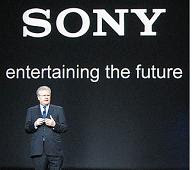
SONY brand needs no introduction. From its modest beginning as a producer of transistor radios, SONY is now a household name in electronic and consumer products market. For a number of years, SONY won a lot of accolades and awards for its continuous innovations and technology inventions.
Some of the hot products by SONY are the Walkman, Play Station, Cyber-Shot Digital Cameras, VAIO notebooks and many more.
SONY set up their first manufacturing plant in Prai more than 20 years ago and today employs over 13,000 staff nationwide. The Seberang Perai plant is another of Sony’s facility apart from the Bangi plant and an office in PJ, Selangor.
 5. Agilent Technologies
Agilent Technologies’ current manufacturing plant was a result of a spin-off from Hewlett Packard company and was officially launched on 1 November 1999. The beginning of the original Agilent Penang was way back in 1970s.
Agilent’s main business covers the manufacturing of electronic measurement devices, sensors, medical and bio-medical equipment, networks and many more. Agilent follows many other players to exercise transferring some of the facilities to China but the current business operation in Penang remains vibrant.
And oh, in case you have not noticed, Agilent has one of the best, most professional and nicest security personnel around. Kudos to them.
 6. Seagate
Penang Seagate was established in 1988 and primarily manufactures thin film magnetic recording heads, also known as sliders. If you don’t know what it means, just remember Seagate to be a company in data storage business.
In terms of employment, Seagate offers a wide range of opportunities including research, development, manufacturing, business operations, support and so on. Currently, Seagate employs over 50,000 staff worldwide, with their main facility based in Scotts Valley, California.
 7. Jabil Circuit
A Fortune 500 company, Jabil Circuit is one of the major EMS (Electronic Manufacturing Services) providers in the world. (An EMS company is also known as a Contract Manufacturer.) Its Penang plant is located in Bayan Lepas Industrial Zone, facing the beach.
An Electronic Manufacturing Services company is a company that designs, tests, manufactures, distributes and provides service for Original Design Manufacturer, ODM and Original Equipment Manufacturer, OEM. In other words, it provides outsourcing services to the clients. For example, Nokia (OEM) outsources Jabil Circuit (EMS) to provide all the manufacturing and distribution service while the company itself focus on the research and development work.
 8. Flextronics
Similar to Jabil Circuit, Flextronics is also an Electronic Manufacturing Services (EMS) company. Flextronics operates in more than 30 countries worldwide and helps its customers to design, build, and ship and service electronics products across the world.
Their plant in Penang is one of their many facilities in Malaysia that include Shah Alam, Selangor and Melaka. It provides Design Services, Component Solutions, Test Services and Manufacturing & Assembly. Flextronics offers excellent opportunities for professional growth, a competitive compensation package, and a highly collaborative work environment as well as international exposure.
In the latest development, Flextronics acquired Solectron in mid 2007 to create ‘the most diversified and premier global provider of advanced design and vertically integrated electronics manufacturing services.’ Their next annual revenue is expected to be more than US30 billions after the merger.
 9. BBraun
BBraun is a worldwide company with established history of supplying medical products and solutions which include surgical, pharmaceutical and healthcare products.
BBraun was founded some 160 years ago, with it’s headquarter based in Germany. The Penang facility employs over 4,000 staff and is among one of the largest of their plants worldwide.
BBraun Malaysia is currently under expansion plan with as much as RM400 millions to be invested between 2006-2009
Interestingly, Penang state is today the third-largest economy amongst the states of Malaysia, after Selangor and Johor. Manufacturing is the most important component of the Penang economy, contributing 45.9% of the State's GDP (2000). The southern part of the island is highly industrialized with high-tech electronics plants (such as Dell, Intel, AMD, Altera, Motorola, Agilent, Hitachi, Osram, Plexus, Bosch and Seagate) located within the Bayan Lepas Free Industrial Zone. In January 2005, Penang was formally accorded the Multimedia Super Corridor Cyber City status, the first outside of Cyberjaya, with the aim of becoming a high-technology industrial park that conducts cutting-edge research.
In recent years, however, this state is experiencing a gradual decline of foreign direct investments due to factors such as cheaper labor costs in China and India but it is still the closest contact point within Asia.
10 Top Manufacturing Companies in Penang
1. Intel
Intel is one of the biggest investors in Penang and surely enough is considered as the Golden Boy of Penang. Intel has a large number of facilities across Bayan Lepas, Seberang Perai and Kulim, Kedah and presently has one of the largest work forces in Malaysia.
Perhaps because it is so big and powerful, people either love Intel or hate them.
Those who love Intel will dream every night when they can work with them. People who otherwise hate Intel will come out with something like Face Intel that tells you every possible reason why you need not to work with Intel.
 2. Motorola
While the size of their facility is not as big as Intel, Motorola is one of the best learning avenues for those technical oriented people as the company continues to stamp its presence with continuous innovation of new products as the years go by.
Motorola remains one of the most admired companies which nurtures and produces top engineering talents. Motorola plant in Penang is equipped with a world class Research & Development Center (R&D) and a Distribution Center. The only downside that I see is their uniforms. They just look weird.
Motorola recently was awarded the Chief Minister’s Award due to its contribution in developing knowledge workers in Penang and Malaysia.
 3. Dell
Dell’s contribution in Malaysia earned the founder, Micheal Dell, a Datukship. After establishing Dell Asia Pacific in Penang, they have further stamped their commitment in the development of additional facilities by investing in new facilities in Cyberjaya, thus adding more jobs and creating more opportunities for the local people.
Dell Penang has an assembly facility that produces wide range of products including notebook and desktop computers. There is also a support division for Asia Pacific operation. This is where the call center people work around the clock attending to you, the Dell customers.
 4. Sony
SONY brand needs no introduction. From its modest beginning as a producer of transistor radios, SONY is now a household name in electronic and consumer products market. For a number of years, SONY won a lot of accolades and awards for its continuous innovations and technology inventions.
Some of the hot products by SONY are the Walkman, Play Station, Cyber-Shot Digital Cameras, VAIO notebooks and many more.
SONY set up their first manufacturing plant in Prai more than 20 years ago and today employs over 13,000 staff nationwide. The Seberang Perai plant is another of Sony’s facility apart from the Bangi plant and an office in PJ, Selangor.
 5. Agilent Technologies
Agilent Technologies’ current manufacturing plant was a result of a spin-off from Hewlett Packard company and was officially launched on 1 November 1999. The beginning of the original Agilent Penang was way back in 1970s.
Agilent’s main business covers the manufacturing of electronic measurement devices, sensors, medical and bio-medical equipment, networks and many more. Agilent follows many other players to exercise transferring some of the facilities to China but the current business operation in Penang remains vibrant.
And oh, in case you have not noticed, Agilent has one of the best, most professional and nicest security personnel around. Kudos to them.
6. SeagatePenang Seagate was established in 1988 and primarily manufactures thin film magnetic recording heads, also known as sliders. If you don’t know what it means, just remember Seagate to be a company in data storage business.
In terms of employment, Seagate offers a wide range of opportunities including research, development, manufacturing, business operations, support and so on. Currently, Seagate employs over 50,000 staff worldwide, with their main facility based in Scotts Valley, California.
7. Jabil CircuitA Fortune 500 company, Jabil Circuit is one of the major EMS (Electronic Manufacturing Services) providers in the world. (An EMS company is also known as a Contract Manufacturer.) Its Penang plant is located in Bayan Lepas Industrial Zone, facing the beach.
An Electronic Manufacturing Services company is a company that designs, tests, manufactures, distributes and provides service for Original Design Manufacturer, ODM and Original Equipment Manufacturer, OEM. In other words, it provides outsourcing services to the clients. For example, Nokia (OEM) outsources Jabil Circuit (EMS) to provide all the manufacturing and distribution service while the company itself focus on the research and development work.
 8. Flextronics
Similar to Jabil Circuit, Flextronics is also an Electronic Manufacturing Services (EMS) company. Flextronics operates in more than 30 countries worldwide and helps its customers to design, build, and ship and service electronics products across the world.
Their plant in Penang is one of their many facilities in Malaysia that include Shah Alam, Selangor and Melaka. It provides Design Services, Component Solutions, Test Services and Manufacturing & Assembly. Flextronics offers excellent opportunities for professional growth, a competitive compensation package, and a highly collaborative work environment as well as international exposure.
In the latest development, Flextronics acquired Solectron in mid 2007 to create ‘the most diversified and premier global provider of advanced design and vertically integrated electronics manufacturing services.’ Their next annual revenue is expected to be more than US30 billions after the merger.
 9. BBraun
BBraun is a worldwide company with established history of supplying medical products and solutions which include surgical, pharmaceutical and healthcare products.
BBraun was founded some 160 years ago, with it’s headquarter based in Germany. The Penang facility employs over 4,000 staff and is among one of the largest of their plants worldwide.
BBraun Malaysia is currently under expansion plan with as much as RM400 millions to be invested between 2006-2009

10. Avago Technologies
Just like Motorola which separated from the semiconductor division (the Motorola PJ, which we now know as Freescale Semiconductors), Agilent Technologies followed the same move in 2005 by separating with the semiconductor group.
As a result of the Agilent’s Semiconductor Product Group acquisition, Avago Technologies was born. Avago is said to be the largest privately-held semiconductor company. Avago’s plant remains in the same compound with Agilent, alongside the latter’s Test and Measurement Division.
It has become somewhat of an employee's market. So how do you hang on to existing talent?
Indeed, today's talent cannot be won over through basic methods such as increased remuneration. Attracting and retaining talent has become a corporate objective of some organizations, if not most at this stage. They are striving to improve their methods for managing, motivating and training talent.
Every employee is motivated for different reasons. It is important to capture this information as each individual stays and progresses within the organization. We will see an increasing trend in the use of human resources information systems and tools being used for updating key employee data and each individual's motivators.
To overcome this issue companies should develop an "employer of choice" mentality. They can do this by paying at least at 75 percentile of the job market; provide employees with challenging but interesting and developing work. In addition, they can strive to create a culture where all staff are expected to live the core values and have supervisors who realize their key role is supporting and taking an interest in their staff. Other measures like flexible work hours, the development of a collegiate atmosphere as well as a pleasant work place with good tech tools will also help.
Retaining employees today rarely depends on compensation as a sole factor. There are several factors involved such as benefits, job satisfaction, job recognition, job advancements, personal development, and recognition of contribution. Hence, companies will have to formulate a plan for employees to recognize their job objectives for the incumbent to contribute substantially to an organization. Through the plan, employers will recognize the shortfall of the employee's skills. It can then contribute towards developing an employee's skill-set through initiatives like training.
Growing shift beyond remuneration as a motivator?
Talent diversity and mobility present a lot of challenges for business leaders and HR practitioners where they have to manage staff retention, relocation and expatriate management matters as well as succession planning. While talent management is key, succession planning is just as important to retain knowledge held by retiring matured workers and ensuring there is sufficient time to coach and develop successors. One of the major challenges would be getting HR professionals to focus on developing line managers to be equipped with people management capabilities and evolving them into people managers, who are not just functional specialists.
The challenge for HR practitioners would be, how "seamless" can the HR role be performed and transited within the organization to minimize conflicts at the strategic and tactical levels are a real test to the organization.
However, the only constant is the measurement or the metrics factor. HR professionals must constantly assess, review and level up its competencies and capabilities to keep up to the needs of the changing business environment. It's only through this constant practice that HR practitioners can stay relevant and strategic, and be a long-term partner to work together with CEO, business and HR leaders to refresh and retain the talent pool within the organization.
Pay is always important among young talent. But increasingly the focus is shifting to providing work which moves them forward in knowledge and skill development. Secondly, it's having supervisors who understand that if they don't involve, listen to, and show genuine interest in their staff and their progress, then there are consequences.
Just like Motorola which separated from the semiconductor division (the Motorola PJ, which we now know as Freescale Semiconductors), Agilent Technologies followed the same move in 2005 by separating with the semiconductor group.
As a result of the Agilent’s Semiconductor Product Group acquisition, Avago Technologies was born. Avago is said to be the largest privately-held semiconductor company. Avago’s plant remains in the same compound with Agilent, alongside the latter’s Test and Measurement Division.
It has become somewhat of an employee's market. So how do you hang on to existing talent?
Indeed, today's talent cannot be won over through basic methods such as increased remuneration. Attracting and retaining talent has become a corporate objective of some organizations, if not most at this stage. They are striving to improve their methods for managing, motivating and training talent.
Every employee is motivated for different reasons. It is important to capture this information as each individual stays and progresses within the organization. We will see an increasing trend in the use of human resources information systems and tools being used for updating key employee data and each individual's motivators.
To overcome this issue companies should develop an "employer of choice" mentality. They can do this by paying at least at 75 percentile of the job market; provide employees with challenging but interesting and developing work. In addition, they can strive to create a culture where all staff are expected to live the core values and have supervisors who realize their key role is supporting and taking an interest in their staff. Other measures like flexible work hours, the development of a collegiate atmosphere as well as a pleasant work place with good tech tools will also help.
Retaining employees today rarely depends on compensation as a sole factor. There are several factors involved such as benefits, job satisfaction, job recognition, job advancements, personal development, and recognition of contribution. Hence, companies will have to formulate a plan for employees to recognize their job objectives for the incumbent to contribute substantially to an organization. Through the plan, employers will recognize the shortfall of the employee's skills. It can then contribute towards developing an employee's skill-set through initiatives like training.
Growing shift beyond remuneration as a motivator?
Talent diversity and mobility present a lot of challenges for business leaders and HR practitioners where they have to manage staff retention, relocation and expatriate management matters as well as succession planning. While talent management is key, succession planning is just as important to retain knowledge held by retiring matured workers and ensuring there is sufficient time to coach and develop successors. One of the major challenges would be getting HR professionals to focus on developing line managers to be equipped with people management capabilities and evolving them into people managers, who are not just functional specialists.
The challenge for HR practitioners would be, how "seamless" can the HR role be performed and transited within the organization to minimize conflicts at the strategic and tactical levels are a real test to the organization.
However, the only constant is the measurement or the metrics factor. HR professionals must constantly assess, review and level up its competencies and capabilities to keep up to the needs of the changing business environment. It's only through this constant practice that HR practitioners can stay relevant and strategic, and be a long-term partner to work together with CEO, business and HR leaders to refresh and retain the talent pool within the organization.
Pay is always important among young talent. But increasingly the focus is shifting to providing work which moves them forward in knowledge and skill development. Secondly, it's having supervisors who understand that if they don't involve, listen to, and show genuine interest in their staff and their progress, then there are consequences.
More employees are looking for job satisfaction and recognition opportunities.
HR/talent management software, how has it helped the talent management process?
Today, we see integrated talent and compensation management programs that feature areas such as pre-employment skills and personality and behavioral assessments.
One of the leading technology companies in Europe created dedicated compensation planning software to allow HR managers to gain full access to performance history and succession data while planning and allocating merit and equity rewards within one system.
It helps in competency profiling and selection, the skill auditing, measuring and managing performance and in personal development and recognition. It also provides access to many aspects of personnel reporting and "at a glance" data.
The system has contributed to multiple aspects of our talent management process, especially for recognition of top performers and development of employees. The capability of generating analytical reports also helps the management and saves a lot of time for our HR people.
Increasing use of technologies is at the expense of the "human" factor or the personal touch in HR?
Technology or this "paperless" concept plays a value-adding and complimentary role to most HR processes and efforts. However, the human touch is still important and the use of technology can provide good support to tedious functional areas and take time away from heavy paper work. HR practitioners can focus more time and efforts in other soft skills aspects of the job such as providing coaching and counseling to employees, and working with leaders, business and line managers to strategize and map out competency roadmap to enhance knowledge and skills of the employees.
e-HR today provides a roadmap with systems and tools. HR staff will always need to be strong in EQ and especially the listening and empathy aspects. However, they will need to have more knowledge of the business and naturally be IT-savvy. HR staff in the future should be ex-line executives or supervisors who are seen as high-potential who then spend one year in HR before going back into line management.
With the help of technology platforms, HR professionals gain more comprehensive information on both individual employee and teams, which improves fairness in the organization. Other than that, transparency in communication within the organization is also improved. These are examples how technologies can help to avoid the problems of being too "personal". But after all, technologies do not make decisions for you, but target to provide you sufficient and analytical information for you to come out with good strategies. So the "human" factor in HR should not be affected.
Seeking your employee buy-in for the new processes or ways of doing things associated with the new technology tools?
We need to be "time-sensitive" and "profile-sensitive" to employees. Each individual learns at a different speed and it's important that the training in place be structured and allows more time to employees who might not be so savvy with technology. An orientation about technology or a refresher program might help.
Most people don't like change. People often only go to the doctor when they have pain. Show them the potential agony and then they will change. Even if present methods show no sign of real problems this still means continually including them in all aspects of the design and implementation process. By doing this, one develops understanding of efficiency and best practice processes and ultimately you gain commitment.
Educate the employees on the benefits of the change and how it would assist them in making the working environment better.
HR/talent management software, how has it helped the talent management process?
Today, we see integrated talent and compensation management programs that feature areas such as pre-employment skills and personality and behavioral assessments.
One of the leading technology companies in Europe created dedicated compensation planning software to allow HR managers to gain full access to performance history and succession data while planning and allocating merit and equity rewards within one system.
It helps in competency profiling and selection, the skill auditing, measuring and managing performance and in personal development and recognition. It also provides access to many aspects of personnel reporting and "at a glance" data.
The system has contributed to multiple aspects of our talent management process, especially for recognition of top performers and development of employees. The capability of generating analytical reports also helps the management and saves a lot of time for our HR people.
Increasing use of technologies is at the expense of the "human" factor or the personal touch in HR?
Technology or this "paperless" concept plays a value-adding and complimentary role to most HR processes and efforts. However, the human touch is still important and the use of technology can provide good support to tedious functional areas and take time away from heavy paper work. HR practitioners can focus more time and efforts in other soft skills aspects of the job such as providing coaching and counseling to employees, and working with leaders, business and line managers to strategize and map out competency roadmap to enhance knowledge and skills of the employees.
e-HR today provides a roadmap with systems and tools. HR staff will always need to be strong in EQ and especially the listening and empathy aspects. However, they will need to have more knowledge of the business and naturally be IT-savvy. HR staff in the future should be ex-line executives or supervisors who are seen as high-potential who then spend one year in HR before going back into line management.
With the help of technology platforms, HR professionals gain more comprehensive information on both individual employee and teams, which improves fairness in the organization. Other than that, transparency in communication within the organization is also improved. These are examples how technologies can help to avoid the problems of being too "personal". But after all, technologies do not make decisions for you, but target to provide you sufficient and analytical information for you to come out with good strategies. So the "human" factor in HR should not be affected.
Seeking your employee buy-in for the new processes or ways of doing things associated with the new technology tools?
We need to be "time-sensitive" and "profile-sensitive" to employees. Each individual learns at a different speed and it's important that the training in place be structured and allows more time to employees who might not be so savvy with technology. An orientation about technology or a refresher program might help.
Most people don't like change. People often only go to the doctor when they have pain. Show them the potential agony and then they will change. Even if present methods show no sign of real problems this still means continually including them in all aspects of the design and implementation process. By doing this, one develops understanding of efficiency and best practice processes and ultimately you gain commitment.
Educate the employees on the benefits of the change and how it would assist them in making the working environment better.
There is always a way to retain and attract than dangling that big carrot in front of mercenary workforce...
Thursday, May 15, 2008
The Art of Attracting Talent

In a people intensive business environment, attracting and retaining talent is the single biggest driver for delivery success. I have seen one great developer single handedly pull a complex project out of the dumps in three weeks flat. Unfortunately, he was too good to stick on and left, I am sure any manager would have had similar experiences. Well, let me start with the fundamental issue of attracting talent. After all you can’t retain talent that you can’t attract in the first place.
Create a unique, niche brand identity:
The services world, people tend to gravitate towards attractive brand names. Now, many of the attractive brands are also the bigger brands. No cause for despair though. The key here is that you don’t need to be a big brand to be an attractive one. But you need to generate the buzz, the excitement. Define a niche for yourself, dream up an innovative promotion campaign and go to town with it and watch the resumes roll in. Say you are a product outsourcing company; craft your campaign around the unique words, feelings and emotions that your employees get to experience each day. Use words unique to your context (say a code word for a successful product release, or the nick name for the client’s CTO). Better still, get your employees to dream up the content for your ads. Nobody can communicate raw emotion than the people who are experiencing it every day, day after day. Let the excitement, fun and learning come out in a way only your employees can put it!
Create a unique, niche brand identity:
The services world, people tend to gravitate towards attractive brand names. Now, many of the attractive brands are also the bigger brands. No cause for despair though. The key here is that you don’t need to be a big brand to be an attractive one. But you need to generate the buzz, the excitement. Define a niche for yourself, dream up an innovative promotion campaign and go to town with it and watch the resumes roll in. Say you are a product outsourcing company; craft your campaign around the unique words, feelings and emotions that your employees get to experience each day. Use words unique to your context (say a code word for a successful product release, or the nick name for the client’s CTO). Better still, get your employees to dream up the content for your ads. Nobody can communicate raw emotion than the people who are experiencing it every day, day after day. Let the excitement, fun and learning come out in a way only your employees can put it!
Consciously build informal networks:
The best prospects are those that never apply! How does one target this segment? Brute force head hunting comes full of risks. Well, actively create informal networks. If you have a need for great architects, create a corporate “Architecture blog” and encourage your star architects to start writing about their work and their ideas. This is not going to directly bring in dozens of resumes overnight, but will create mindshare in the niche segments that you want to target. When your competitor’s star awakens, his first instinct will be to tap into your informal network. Why? Because, thanks to the value he has gained from your company’s blog and the semi personal/semi professional relationships he has built with your employees, the company and it’s work are already sold. He already believes that people like him are successful in your company. You just need to discuss numbers now before you bring him in!
Publicize your success with people:
Next time you put out your recruitment ad, let your stars sing their success stories. Let them speak about how the company has helped them reach their goals. Give out the contact details of your star and let the candidates write to/speak to him. This will serve the cause of retention and also make your recruitment pitch more credible.
Impress the common man: The common man knows Microsoft as Bill Gates’s company and not without good reason. People are attracted to big charismatic names. But why bother about impressing the common man when you are looking for great techies? In the changing work of work where social pressure and image are important drivers for choosing a company, especially at junior levels. If you have a big name in your company, get an MediaCorp or a CNA to interview him/her. Let the people *outside* the arena world know about what he/she and your company are doing.
Impress the common man: The common man knows Microsoft as Bill Gates’s company and not without good reason. People are attracted to big charismatic names. But why bother about impressing the common man when you are looking for great techies? In the changing work of work where social pressure and image are important drivers for choosing a company, especially at junior levels. If you have a big name in your company, get an MediaCorp or a CNA to interview him/her. Let the people *outside* the arena world know about what he/she and your company are doing.
Make recruitment ads more meaningful:
Most recruitment ads do two things well .a). Spell out a great job description. b). Trumpet the company. What most don’t do well is to spell out the benefits. If your company sponsors an expensive and coveted certification, have a great pension scheme or a tie up with an IIM to do an MBA; make it part of your ad. You never know what appeals to an individual. Put your best step forward!
Thursday, February 14, 2008
How To Manage Your Executive Résumé
If you're an executive, your résumé can be a marketing vehicle of immense consequence, but only if it's managed effectively. That means it must convey your career story accurately and compellingly, and must be delivered into the right headhunter's hands at the right time.
But don't be alarmed if it's been a while since you last updated your résumé. Whether you've already taken a headhunter's call or are hoping to be referred to one, what matters is that you have an accurate record of your employment history and professional accomplishments from which to create your new résumé. (Of course, that requires that you to do some record-keeping along the way so you can put together a résumé fairly easily and quickly when called upon to do so.)
Before you start writing (if you're lucky, an enterprising headhunter has offered to write it for you and merely wants you to answer his questions), think about what you're trying to achieve. Where exactly do you want to go next? What kind of senior-management position will most effectively leverage your education, experience, skills, and leadership abilities? And what do you believe you're really capable of doing?
Be Straightforward and Honest
Once you've answered these and other end-game questions to your own satisfaction, you can begin to craft a compelling résumé that communicates your experience and smarts in a way that may appeal to the executive headhunter.
Having a good grasp of the general direction you'd like to see your career move in is essential, not only to help identify the recruiter(s) who might plug you into the best opportunities but also to differentiate yours from the dozens of résumé your target headhunter(s) already has on hand. The best way to identify those targets is to ask trusted friends, colleagues, and other confidants who may have already built relationships with key headhunters or who may know the most influential among them.
Despite your considerable accomplishments and the insertion of some catchy action words to highlight results that you've helped deliver, your new résumé may strike you as being rather homogenous. Don't worry if that's the case. Even the most polished, professional résumé can't convey the full fabric and substance of your leadership experience. What it can and should do is package your unique story in a way that is easy to read, appealing in tone, and truly reflects what you've already done. At this stage of your interaction with a headhunter it's most important to prepare a straightforward, honest, and chronological retelling of where you've been, what you've done, and how you see your new career objective.
You want to make it easy for the reader to single out your most critical experiences and responsibilities in a way that mirrors and reinforces the two or three key elevator speech messages that you—or someone you know—used to get the headhunter's attention. Here are some tips to make your résumé and cover letter as appealing as possible:
COVER LETTER: This is the audition that will determine whether the headhunter adds your name either to a short-list of leading candidates for a current or future search or decides not to take the relationship further. Points awarded for clarity and brevity. It should never exceed one page. Be sure to accommodate ample white space as opposed to cramming too much text into your cover letter.
RÈSUMÈ: Put your experience first, in reverse chronological order so the headhunter can easily reconstruct your most recent career moves and understand the choices that guided your ascent into senior management.
•Focus on the results you've delivered. But don't stretch or oversell. Keep it accurate and honest, or pay the consequences at a later date.
•Keep it to two pages in Microsoft (MSFT) Word or Adobe Acrobat PDF format.
•Avoid the temptation to distribute your new executive résumé to a broader audience than the headhunter who is now courting you as a candidate. Don't post your executive résumé on a public Web site or database. Once it's out there, you lose control over it. Even though many of the sites and databases have safeguards against your current employer seeing your résumé, information spreads fast in today's networked world.
•Do not send it unsolicited to other headhunters. If you're lucky, anyone you send it to unsolicited won't even read it. But if they do, you've risked exposing yourself as an active job seeker, one who will be assumed, perhaps unfairly, to be in some kind of career peril.
Your résumé is your calling card, your first impression. Take care that it makes a positive first impression thanks to attention to detail, an honest and straightforward accounting of your experience, careful handling, and a measure of discretion with regard to message, style, and audience.
But don't be alarmed if it's been a while since you last updated your résumé. Whether you've already taken a headhunter's call or are hoping to be referred to one, what matters is that you have an accurate record of your employment history and professional accomplishments from which to create your new résumé. (Of course, that requires that you to do some record-keeping along the way so you can put together a résumé fairly easily and quickly when called upon to do so.)
Before you start writing (if you're lucky, an enterprising headhunter has offered to write it for you and merely wants you to answer his questions), think about what you're trying to achieve. Where exactly do you want to go next? What kind of senior-management position will most effectively leverage your education, experience, skills, and leadership abilities? And what do you believe you're really capable of doing?
Be Straightforward and Honest
Once you've answered these and other end-game questions to your own satisfaction, you can begin to craft a compelling résumé that communicates your experience and smarts in a way that may appeal to the executive headhunter.
Having a good grasp of the general direction you'd like to see your career move in is essential, not only to help identify the recruiter(s) who might plug you into the best opportunities but also to differentiate yours from the dozens of résumé your target headhunter(s) already has on hand. The best way to identify those targets is to ask trusted friends, colleagues, and other confidants who may have already built relationships with key headhunters or who may know the most influential among them.
Despite your considerable accomplishments and the insertion of some catchy action words to highlight results that you've helped deliver, your new résumé may strike you as being rather homogenous. Don't worry if that's the case. Even the most polished, professional résumé can't convey the full fabric and substance of your leadership experience. What it can and should do is package your unique story in a way that is easy to read, appealing in tone, and truly reflects what you've already done. At this stage of your interaction with a headhunter it's most important to prepare a straightforward, honest, and chronological retelling of where you've been, what you've done, and how you see your new career objective.
You want to make it easy for the reader to single out your most critical experiences and responsibilities in a way that mirrors and reinforces the two or three key elevator speech messages that you—or someone you know—used to get the headhunter's attention. Here are some tips to make your résumé and cover letter as appealing as possible:
COVER LETTER: This is the audition that will determine whether the headhunter adds your name either to a short-list of leading candidates for a current or future search or decides not to take the relationship further. Points awarded for clarity and brevity. It should never exceed one page. Be sure to accommodate ample white space as opposed to cramming too much text into your cover letter.
RÈSUMÈ: Put your experience first, in reverse chronological order so the headhunter can easily reconstruct your most recent career moves and understand the choices that guided your ascent into senior management.
•Focus on the results you've delivered. But don't stretch or oversell. Keep it accurate and honest, or pay the consequences at a later date.
•Keep it to two pages in Microsoft (MSFT) Word or Adobe Acrobat PDF format.
•Avoid the temptation to distribute your new executive résumé to a broader audience than the headhunter who is now courting you as a candidate. Don't post your executive résumé on a public Web site or database. Once it's out there, you lose control over it. Even though many of the sites and databases have safeguards against your current employer seeing your résumé, information spreads fast in today's networked world.
•Do not send it unsolicited to other headhunters. If you're lucky, anyone you send it to unsolicited won't even read it. But if they do, you've risked exposing yourself as an active job seeker, one who will be assumed, perhaps unfairly, to be in some kind of career peril.
Your résumé is your calling card, your first impression. Take care that it makes a positive first impression thanks to attention to detail, an honest and straightforward accounting of your experience, careful handling, and a measure of discretion with regard to message, style, and audience.
Friday, January 11, 2008
Think again the next time before you your post personal data online
Perspective
Imagine a day when a contentious topic of a Supreme Court nominee hearing is the content of the candidate's resurrected MySpace page, Flickr account and your blog from your college days? Or the log of phone calls and Web searches you made in the previous year? Or a posted list of purchases made for a christmas party?
These aren't futuristic imaginative thinking. They are timely, important questions that relate to your very personal corner on the Internet. Or, as Sun Microsystems put it, the "network of you".
Many as forsaken or pure innocent ignorance from thinking about how to best safeguard and respect the many million networks of you that interconnect with millions others users like you.
We gain significantly more economic and social benefits from increased participation on the network than digital isolationism.
In order to enjoy the benefits of participation and avoid isolation on the network, we need a renewed effort by industry, policymakers and individual users to prevent an unprecedented breach of data privacy that would shake consumer confidence and create crisis.
With more than a billion users on the Internet now, and with another 500 million users expected to come online by 2010, individuals are creating a massive boom in data.
Do the math. Think about how much e-mail, photos, videos, music, and personal thoughts you stored online 10 years ago. Now think about how much you put online now and will, a decade from now. It's a whole lot and a whole lot more.
On average, one person generates 850 megabytes of data a year. And, by 2010, individuals will create about probably 70 percent of the world's digital data,
Yet, while consumers are creating massive amounts of data, by 2010, businesses, governments and other organizations will be responsible for the security and privacy of 85 percent of this information.
That information represents not only power for those entities, but also a new currency. The big public and private players in IT, search, retail, healthcare, insurance and content sharing are running the equivalent of an information World Bank.
Unfortunately, despite the tremendous personal and financial value of the information in huge databases, we're still operating in an environment where a $40 savings account is more institutionally protected against misuse, fraud and theft than $40 billion worth of digital records.
To solve this problem, we need to develop transparent, open controls that are appropriate to specific types of information and that create respect between organizations and individuals.
Here are the first steps:
• Harmonize regulations.
Many of these current and proposed rules are in conflict with each other, as lawmakers try to balance mandated retention of data with a desire to protect consumer privacy.
We need to work toward synching local rules with international standards, and we need to nurture other economies that are struggling to set up their own legislative privacy schema. A mishmash of rules creates complexities and unpredictability that open opportunities for criminals.
• Build privacy into products and services and gain competitive advantage.
There is a fundamental need for privacy to be built into systems to protect personal data. Where we must retrofit existing technology architectures and individual systems, we must--but this approach comes with its own set of risks.
Indeed, as it is now becoming the norm to consider energy efficiencies when creating products, so should it be to consider privacy from the start of the development process and throughout a product lifecycle.
Businesses that integrate strong, transparent privacy controls into their systems will gain competitive advantage over those that don't.
• Consider privacy part of good corporate governance.
Technologies that help protect confidentiality, control access to data, and enforce enterprise data management policies are enablers for privacy, but they don't address the decision making around how personal information will be used by the organization.
Organizations must carefully consider what data to keep, who can access it and how third-parties can audit the effectiveness of their data management efforts. With a transparent privacy policy in place, a company incurs much less risk and is more attractive to investors and customers.
Companies that manage significant amounts of data tied to individuals should appoint a chief privacy officer with senior-level power, access and accountability.
Yet, despite all the things that policymakers and corporations can do to make the Web a more secure place for your private information, everyone with a network of you has to take personal ownership of his or her small, but growing, space on the Internet.
Before you post that hilarious vacation picture for everyone to see, think about whether it could come back to haunt you years later when you are trying to ascend to the highest court in the land.
Imagine a day when a contentious topic of a Supreme Court nominee hearing is the content of the candidate's resurrected MySpace page, Flickr account and your blog from your college days? Or the log of phone calls and Web searches you made in the previous year? Or a posted list of purchases made for a christmas party?
These aren't futuristic imaginative thinking. They are timely, important questions that relate to your very personal corner on the Internet. Or, as Sun Microsystems put it, the "network of you".
Many as forsaken or pure innocent ignorance from thinking about how to best safeguard and respect the many million networks of you that interconnect with millions others users like you.
We gain significantly more economic and social benefits from increased participation on the network than digital isolationism.
In order to enjoy the benefits of participation and avoid isolation on the network, we need a renewed effort by industry, policymakers and individual users to prevent an unprecedented breach of data privacy that would shake consumer confidence and create crisis.
With more than a billion users on the Internet now, and with another 500 million users expected to come online by 2010, individuals are creating a massive boom in data.
Do the math. Think about how much e-mail, photos, videos, music, and personal thoughts you stored online 10 years ago. Now think about how much you put online now and will, a decade from now. It's a whole lot and a whole lot more.
On average, one person generates 850 megabytes of data a year. And, by 2010, individuals will create about probably 70 percent of the world's digital data,
Yet, while consumers are creating massive amounts of data, by 2010, businesses, governments and other organizations will be responsible for the security and privacy of 85 percent of this information.
That information represents not only power for those entities, but also a new currency. The big public and private players in IT, search, retail, healthcare, insurance and content sharing are running the equivalent of an information World Bank.
Unfortunately, despite the tremendous personal and financial value of the information in huge databases, we're still operating in an environment where a $40 savings account is more institutionally protected against misuse, fraud and theft than $40 billion worth of digital records.
To solve this problem, we need to develop transparent, open controls that are appropriate to specific types of information and that create respect between organizations and individuals.
Here are the first steps:
• Harmonize regulations.
Many of these current and proposed rules are in conflict with each other, as lawmakers try to balance mandated retention of data with a desire to protect consumer privacy.
We need to work toward synching local rules with international standards, and we need to nurture other economies that are struggling to set up their own legislative privacy schema. A mishmash of rules creates complexities and unpredictability that open opportunities for criminals.
• Build privacy into products and services and gain competitive advantage.
There is a fundamental need for privacy to be built into systems to protect personal data. Where we must retrofit existing technology architectures and individual systems, we must--but this approach comes with its own set of risks.
Indeed, as it is now becoming the norm to consider energy efficiencies when creating products, so should it be to consider privacy from the start of the development process and throughout a product lifecycle.
Businesses that integrate strong, transparent privacy controls into their systems will gain competitive advantage over those that don't.
• Consider privacy part of good corporate governance.
Technologies that help protect confidentiality, control access to data, and enforce enterprise data management policies are enablers for privacy, but they don't address the decision making around how personal information will be used by the organization.
Organizations must carefully consider what data to keep, who can access it and how third-parties can audit the effectiveness of their data management efforts. With a transparent privacy policy in place, a company incurs much less risk and is more attractive to investors and customers.
Companies that manage significant amounts of data tied to individuals should appoint a chief privacy officer with senior-level power, access and accountability.
Yet, despite all the things that policymakers and corporations can do to make the Web a more secure place for your private information, everyone with a network of you has to take personal ownership of his or her small, but growing, space on the Internet.
Before you post that hilarious vacation picture for everyone to see, think about whether it could come back to haunt you years later when you are trying to ascend to the highest court in the land.
Subscribe to:
Posts (Atom)